

Press kit
Press Kit: No One Works Here
The complete media kit — press release, bios, praise, quotable phrases, key statistics, interview questions, pre-approved excerpts, and the full lexicon — reproduced in full for journalists, producers, and editors.

A note from the author
Hi, I’m Paul. Thanks for covering No One Works Here. Everything below — press release, bios, praise, pre-approved excerpts, interview questions, key statistics, and the full lexicon — is reproduced in full. If there’s anything else you need for your story, reach out directly.
Press Release
FOR IMMEDIATE RELEASE: August 25, 2026
The End of "Human Time": Why the Next Fortune 500 Company Could Have Zero Employees
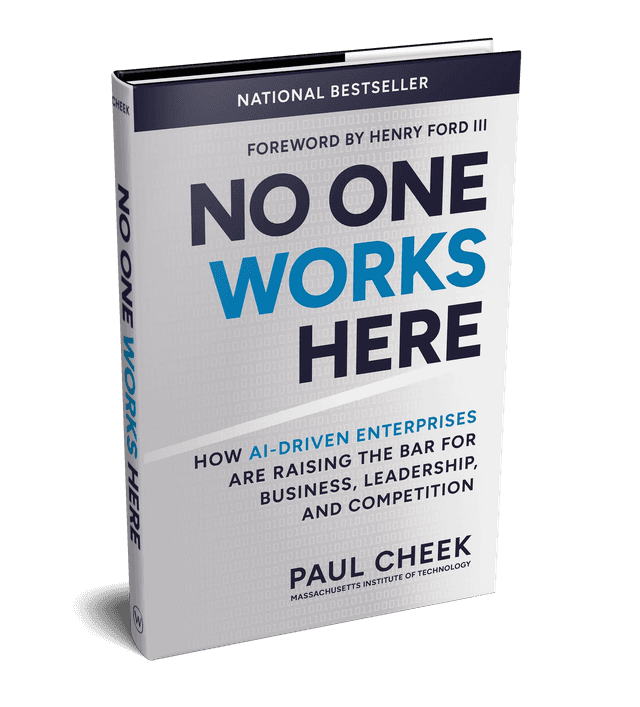
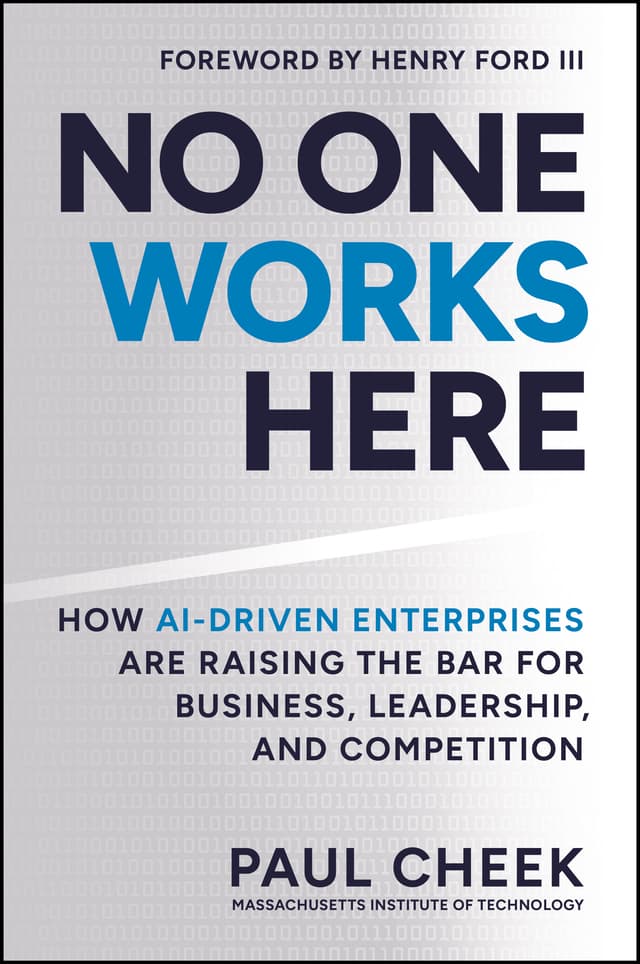
Cambridge, MA, USA. For the last century, the speed of business was dictated by biological limits: humans sleep, eat, schedule meetings, and deliberate. In his groundbreaking new book, No One Works Here: How AI-Driven Enterprises Are Dramatically Redefining Business, Leadership, and Competition, MIT Senior Lecturer and serial entrepreneur Paul Cheek declares that this era, "Human Time," is officially over.
No One Works Here is not a book about mass unemployment; it is a survival manual for the greatest organizational design pivot since the Industrial Revolution. Cheek introduces the AI-Driven Enterprise (AIDE), a model that decouples revenue growth from headcount. The AIDE model focuses on how companies are collapsing innovation debt and achieving exponential scale with a fraction of the traditional workforce — not by replacing human labor with AI nodes, but by empowering every human employee with the AI that lets them have the greatest impact doing the work they most enjoy. It's not about how no one works, but how work has fundamentally changed in the AI era. One case in the book: the industrial manufacturer L&H used AI to compress a two-week quoting cycle to two days, opening the door to five times its prior addressable revenue without adding headcount.
Backed by original research from the AIDE Institute, the independent research venture Cheek co-founded outside MIT, analyzing the S&P 500, Cheek exposes a critical AI literacy crisis among C-Suite executives, leading their companies unprepared into an era of machine speed. The book provides a tactical blueprint for leaders to transition from "Captains" who direct tasks to "Architects" who design intelligent systems.
The choice for every leader is binary: Build an organization that learns, thinks, and acts at the speed of code, or be dismantled by one that does.
Press Contact: Miranda Ewald, miranda@cheek.org
General press inquiries: press@cheek.org.
Review Copies & Full Media Assets Available At: NoOneWorksHere.com
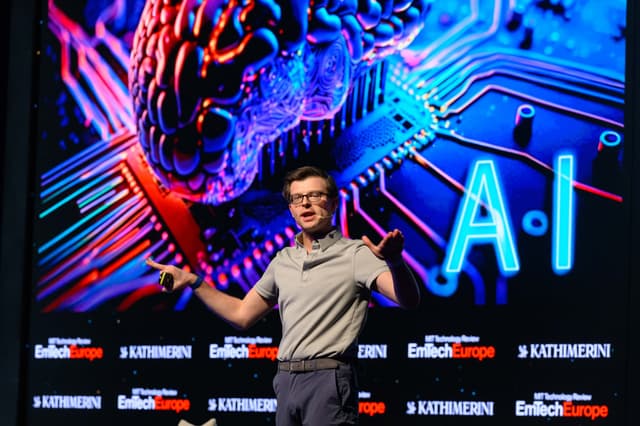
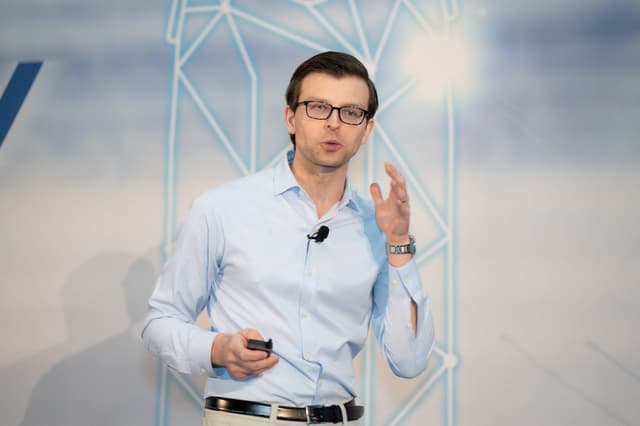
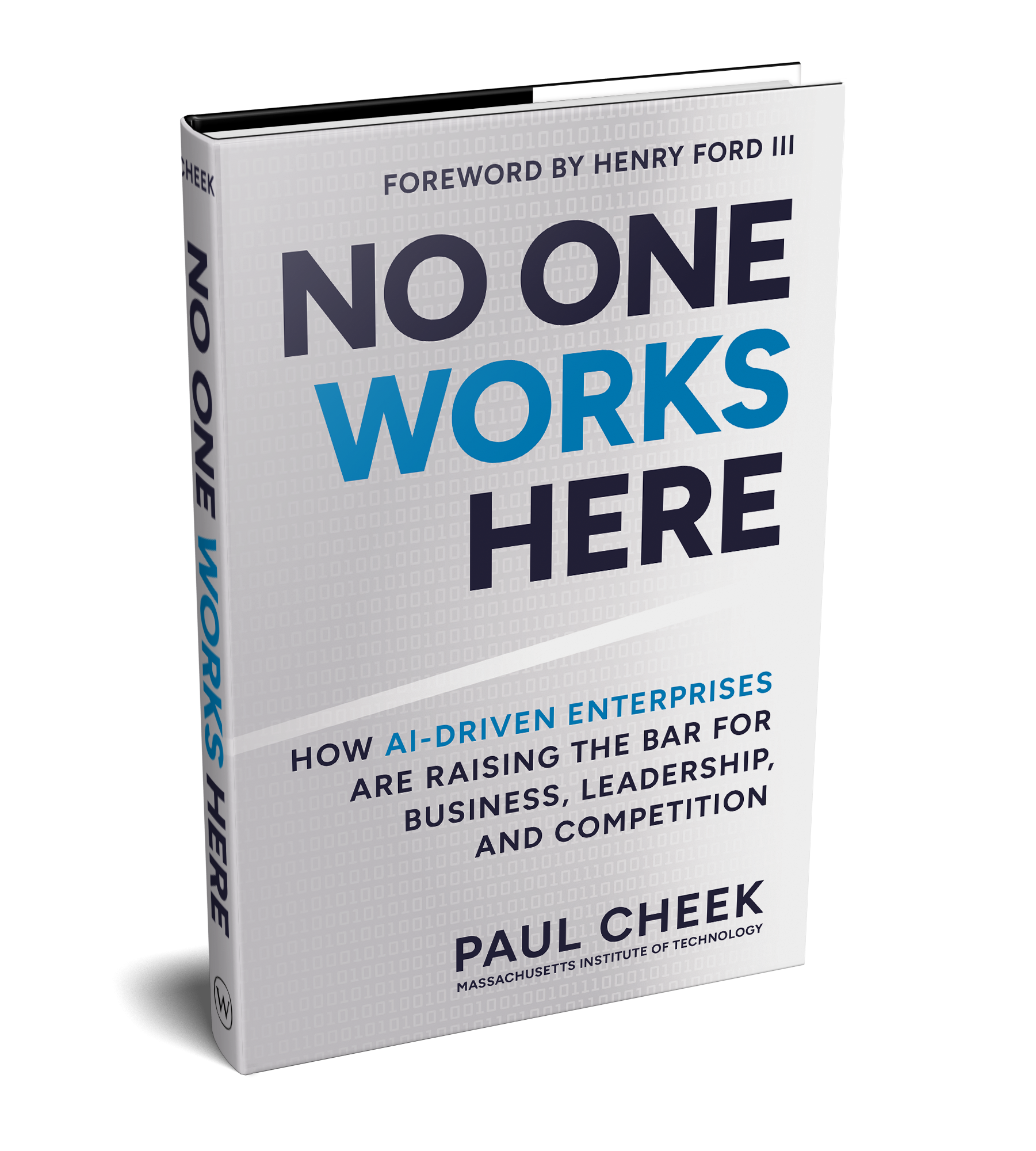
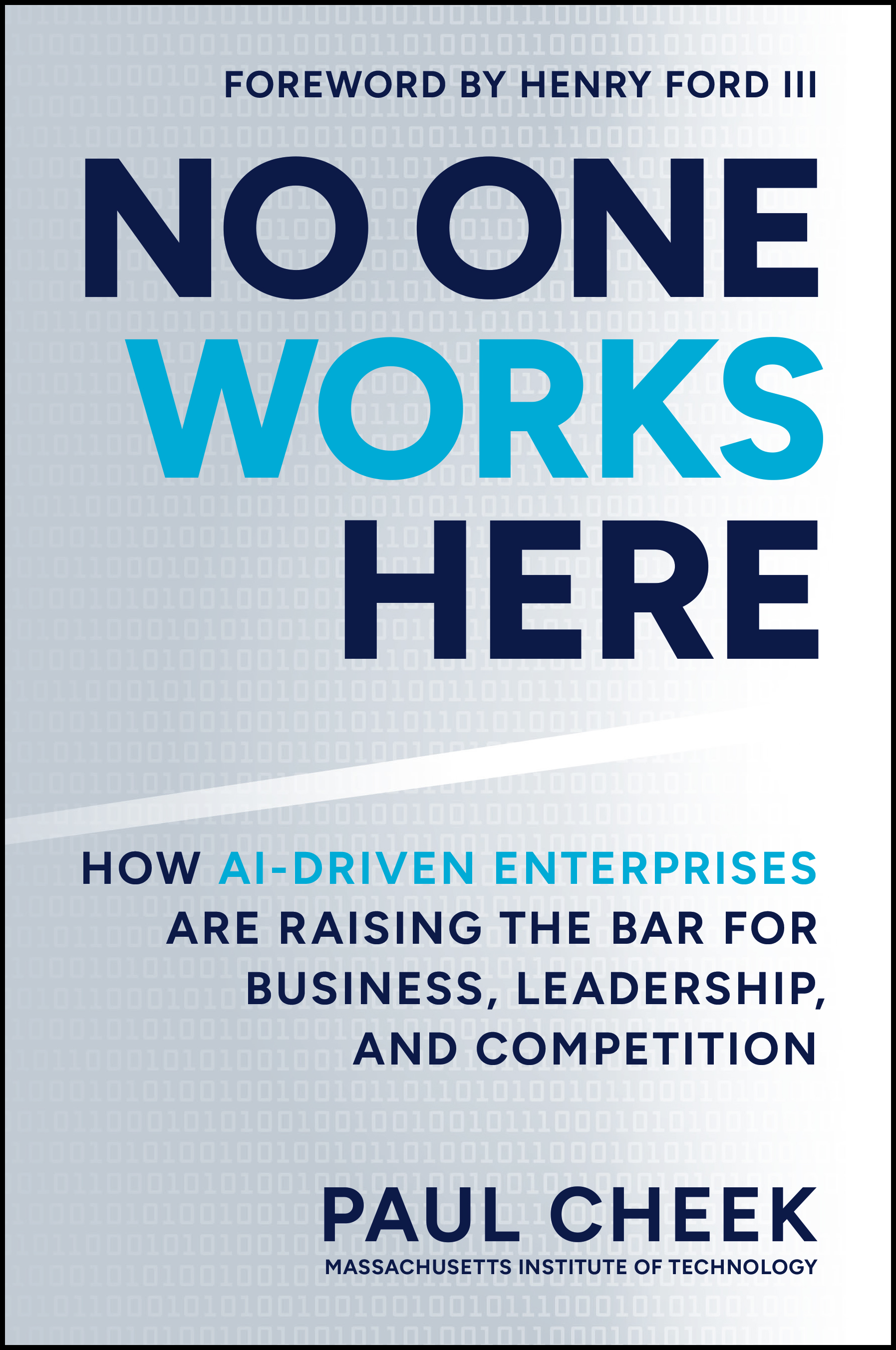
High-resolution author photos and cover art are available at NoOneWorksHere.com/press.
Connect: linkedin.com/in/prcjr.
Publisher: Wiley. Available August 25, 2026, in hardcover and e-book (including Kindle). $30 MSRP. 304 Pages. ISBN: 978-1394435418.
About No One Works Here
For centuries, the speed at which an organization could move was dictated by biological constraints: humans sleep, eat, deliberate, and burn out. In a traditional company, productivity is inextricably linked to human stamina and the friction of human coordination.
In his provocative and urgent new book, No One Works Here, Paul Cheek, MIT Senior Lecturer, serial entrepreneur, and co-founder of the AI-Driven Enterprise Institute, declares that this era of Human Time is officially over.
The book’s title is a provocation, but it is also a literal description of the future of business. As Cheek explains, "When I say No One Works Here, I do not mean No One Matters Here." Work has changed. The goal of the modern enterprise is to reduce manual execution so humans can focus entirely on strategic intent, acting as the architects of systems rather than the gears within the machine.
The Existential Threat: Latency and the Headcount Trap
Cheek reveals that the greatest threat to established enterprises isn't a lack of capital or brand awareness, but latency, the invisible administrative and biological friction slowing them down. Legacy organizations are suffering from what Cheek calls structural debt, the organizational analog to software's well-known technical debt, built for a twentieth-century world where scaling meant falling into the Headcount Trap of hiring armies of humans. Cheek argues this mass turnover is a textbook case of the McNamara Fallacy, boards optimizing for easily measured, short-term metrics while remaining blind to structural risk, and projects that up to 70% of today's Fortune 500 could drop off the list within two decades.
The Solution: The AI-Driven Enterprise (AIDE)
No One Works Here introduces a new category of business: The AI-Driven Enterprise (AIDE). An AIDE combines the global ambition and market-moving power of a tech unicorn with the lean operational footprint of a small business. It does this by fundamentally redefining the dictionary definition of an organization, shifting from a hierarchy of people to a dynamic network of human (Carbon) and AI agent (Silicon) nodes working toward a shared purpose. By using this model, companies decouple revenue growth from headcount growth, allowing a team of 15 to generate the impact of a team of 500.
A Crisis of Governance
This structural revolution is colliding with a massive crisis in corporate governance. Drawing on extensive research from the AIDE Institute, Cheek exposes the reality that corporate boards are generally extremely limited in terms of true AI literacy. Board members and leaders are approving budgets and managing risk for technology they do not understand, which, unlike previous disruptive technologies, presents significant risks given AI agents can take probabilistic actions on behalf of those organizations they represent. Unprepared leadership is fighting an AI war with massed infantry against competitors using machine-based maneuver.
A Tactical Blueprint for Leaders
No One Works Here is not a book of sci-fi predictions, nor is it a technical manual for engineers or a prompt-writing cheat sheet. It is an architectural blueprint for organizational (re)design. It provides a tactical roadmap for senior executives, founders, and investors to shift their posture from reacting to disruption to actively engineering it.
Cheek's blueprint gives leaders a starting move: audit where latency is costing you the most, and decide, within 90 days, whether you're building the organization that outruns this shift or defending the one that gets outrun by it.
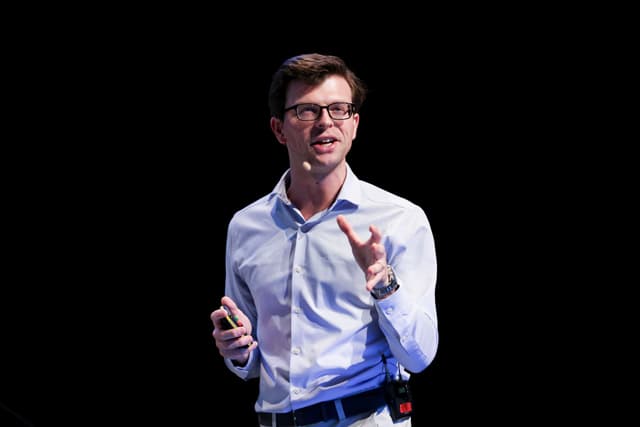
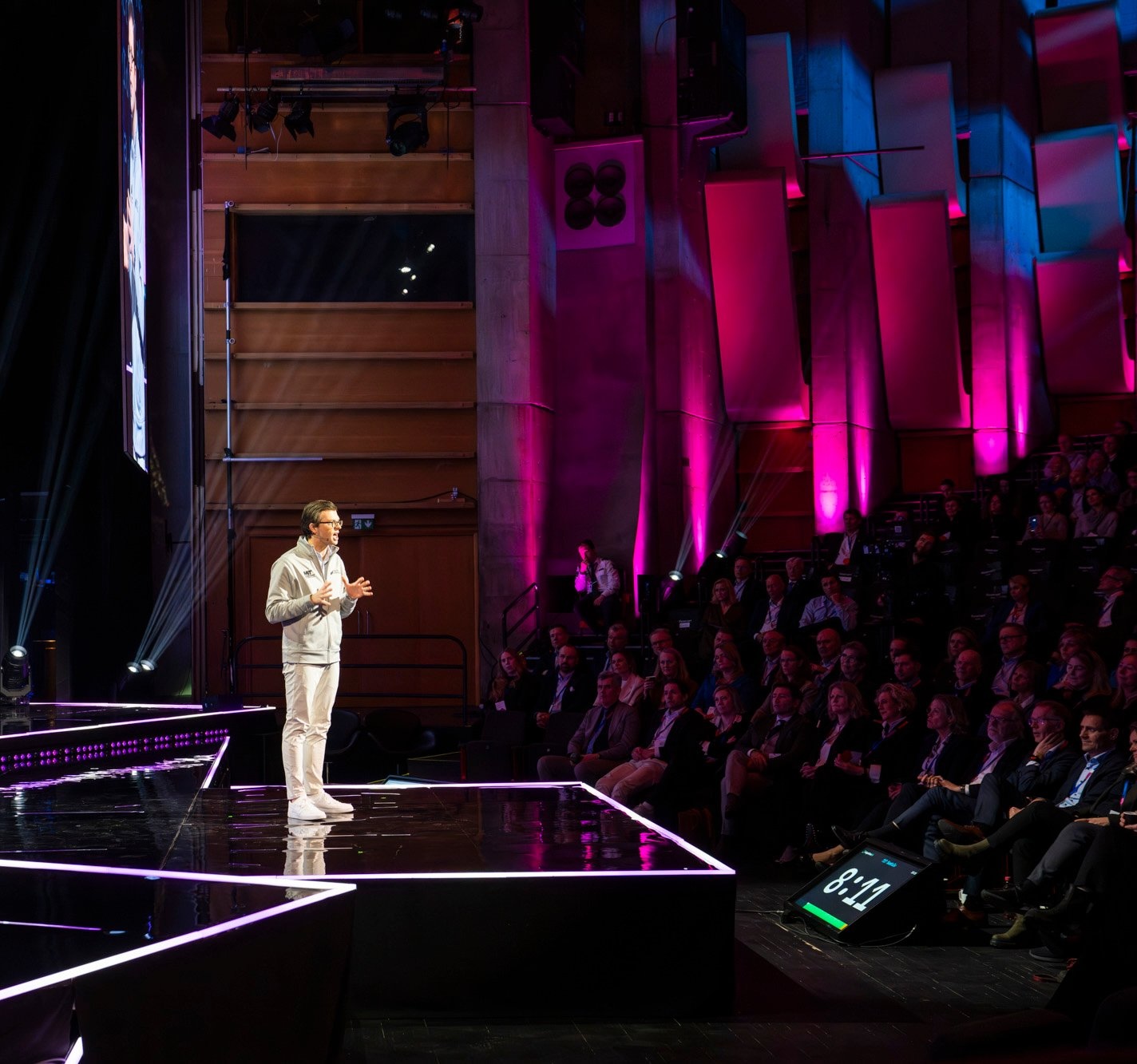
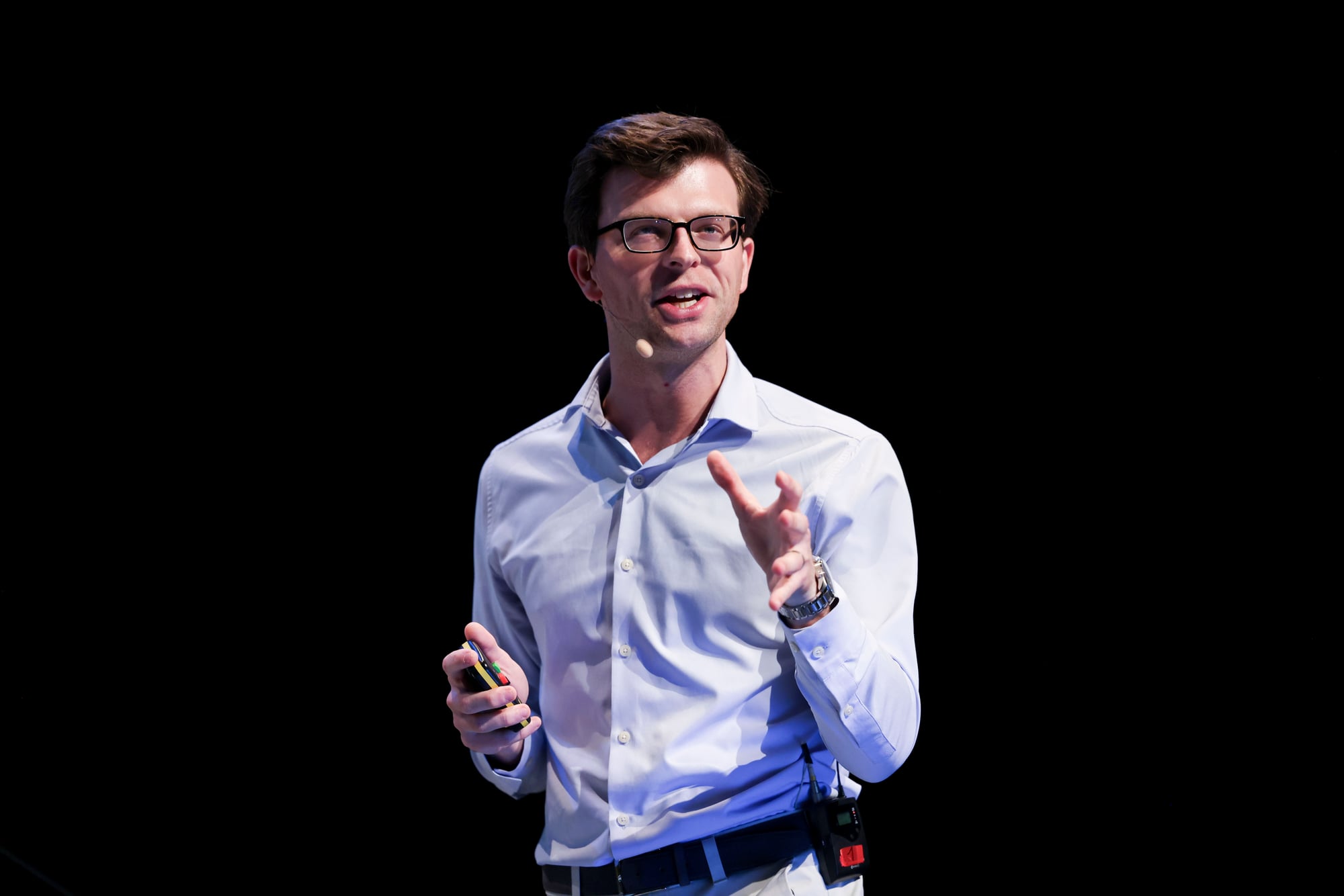
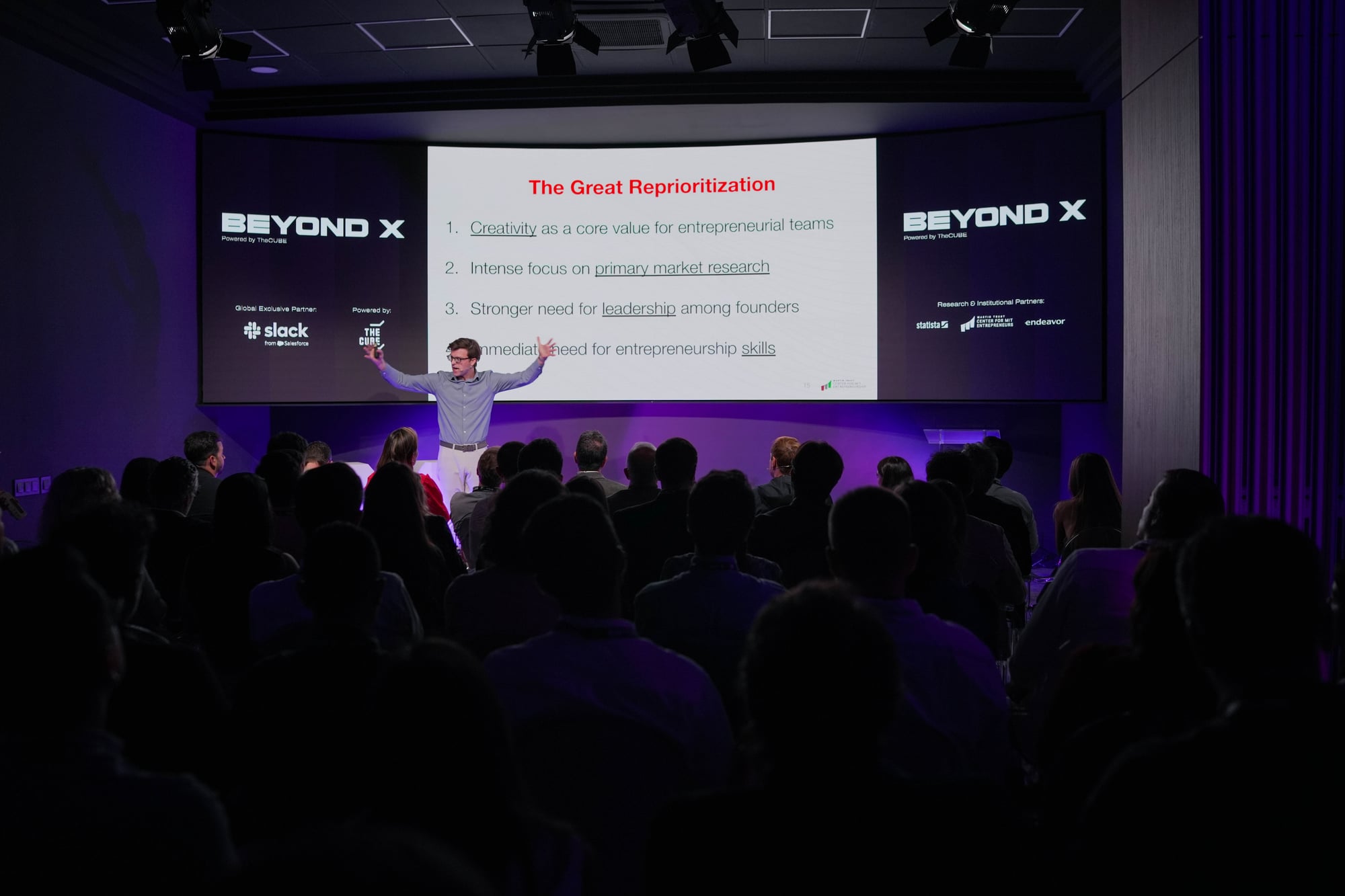
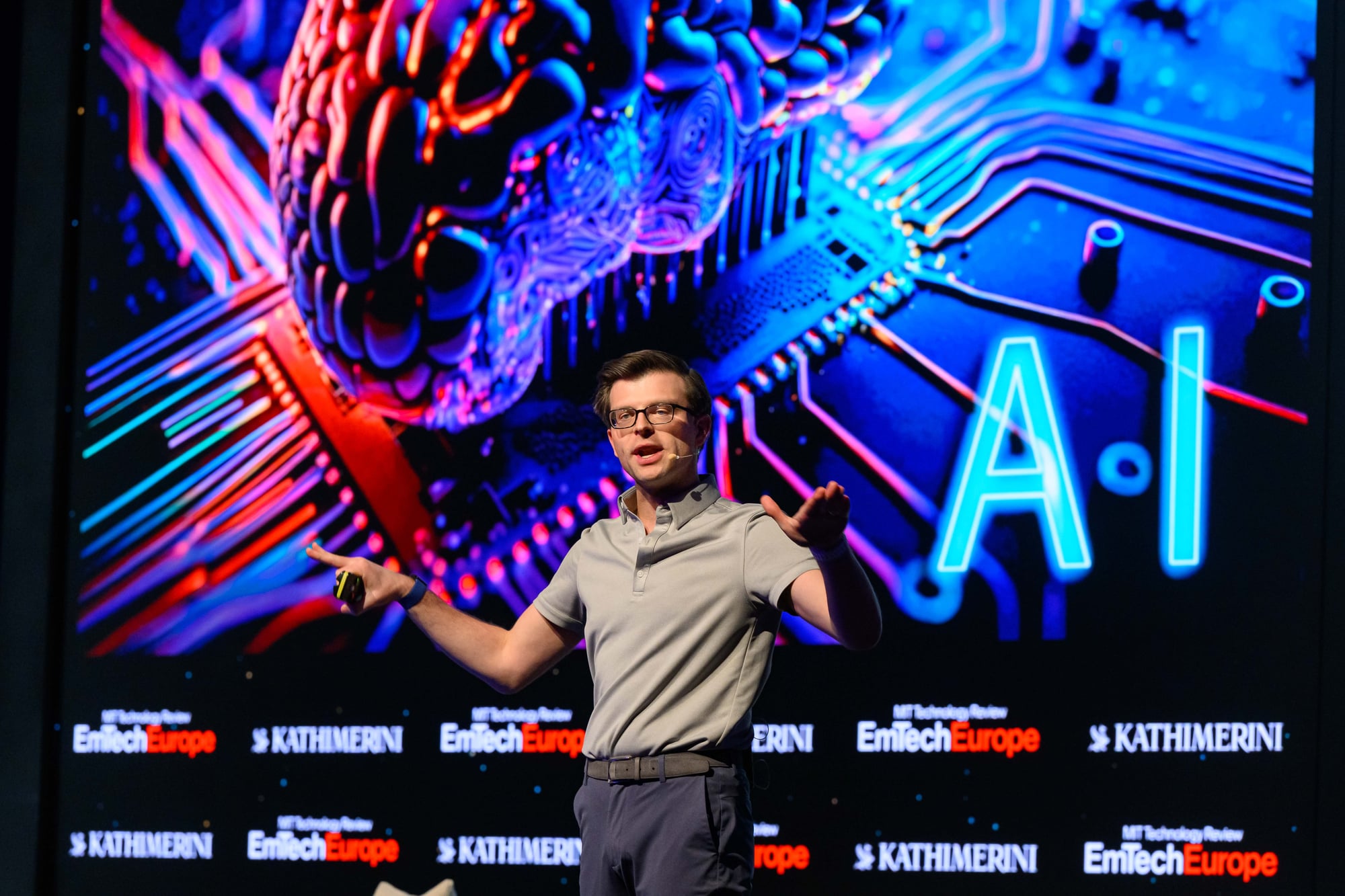
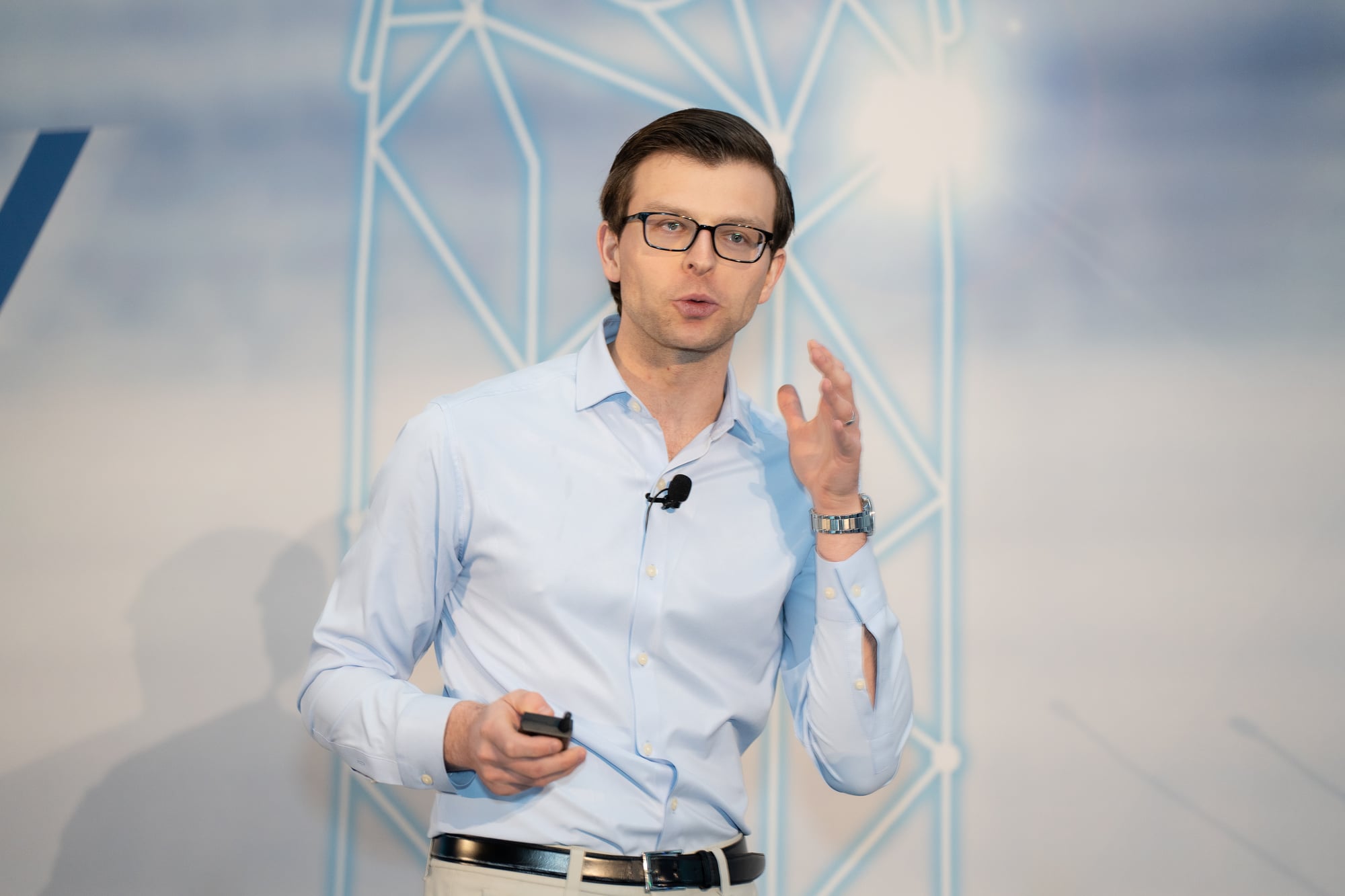
Book Cover Assets & Author Headshots
High-resolution downloads for print and web use.










Praise & Blurbs
“Required reading for every leader in business today…”
Henry Ford III
Member of the Board of Directors, FORD MOTOR COMPANY
“A critical guide for modern architects of business.”
Michael Miebach
CEO, MASTERCARD
“The definitive blueprint for businesses powered by AI.”
Yu-Ting Kuo
Former Corporate Vice President of AI, MICROSOFT
“Map of not just the age of AI, but the age of innovation from all, for all.”
Aneesh Raman
New York Times Bestselling Author of Open to Work
Chief Economic Opportunity Officer, LINKEDIN
“The roadmap for scaling human potential alongside AI. An absolute necessity for any leader building a high-performance culture in the age of intelligence.”
Mary-Alice Vuicic
Former Chief Human Resources Officer, THOMSON REUTERS
“Sharp, visionary, and intensely practical. An essential guide for anyone looking to lead in an era of unprecedented change.”
Mark Gorenberg
Chair, MASSACHUSETTS INSTITUTE OF TECHNOLOGY
Managing Director, ZETTA VENTURE PARTNERS
“This fascinating book makes me nervous. But it’s very important for humans to read.”
Thomas H. Davenport
Wall Street Journal Bestselling Author of All In on AI
Distinguished Professor, BABSON COLLEGE
Faculty Director, METROPOULOS INSTITUTE FOR TECHNOLOGY AND ENTREPRENEURSHIP
Fellow, MIT INITIATIVE ON THE DIGITAL ECONOMY and STANFORD INSTITUTE FOR HUMAN-CENTERED AI
“An essential guide for anyone looking to redesign their workforce for a future where AI serves as the ultimate force multiplier for human ingenuity.”
Jennifer Carpenter
Global Head of Talent, ANALOG DEVICES
“The founder’s secret weapon.”
Gaurav Jain
Co-Founder & Managing Partner, AFORE CAPITAL
“An original and useful model for equipping our organizations for what comes next.”
Dr. Geoff Smart
Founder and Chairman of ghSMART
New York Times Bestselling Author of Who
Approved Pull Quotes
Cleared for use, tagged by audience vertical.
"When I say No One Works Here, I do not mean No One Matters Here."
Paul Cheek, No One Works Here
"AI is doing to the brain what the steam engine did to the muscle."
Paul Cheek, No One Works Here
"In the age of AI, the answer is cheap. The question is expensive."
Paul Cheek, No One Works Here
"The risk isn't that AI will replace your people. The risk is that a company using AI will replace your company."
Paul Cheek, No One Works Here
"We must move from being Captains who direct tasks to Architects who design systems."
Paul Cheek, No One Works Here
"Cognitive Arbitrage has replaced financial engineering as the primary PE value driver."
Paul Cheek, No One Works Here
"Carbon assets don't slow AI. Organizational bureaucracy does."
Paul Cheek, No One Works Here
"Regulation is a latency tax you already know how to pay. The Friday Night Test gives you the framework to pay it in System Time."
Paul Cheek, No One Works Here
The Core Media Pitch (General Executive Audience)
For journalists looking to cover the universal impact of the book across industries, here is the core data:
Top Quotable Phrases
- “This shift marks the end of 'Human Time' as the metronome of the global economy."
- "The most dangerous bug in the business world isn't in your software code. It is in the dictionary."
- “The greatest threat to an established enterprise is not a lack of capital, but the invisible friction of latency. Most organizations won’t survive the age of intelligent systems… Will yours?”
- “The risk of obsolescence mandates the need for structural reinvention.”
- "AI is doing to the brain what the steam engine did to the muscle."
- “The AI-Driven Enterprise model decouples risk capital accessibility from entrepreneurial opportunity and economic growth. For decades, the gap between having an idea and executing it could only be bridged by those fluent in complex programming languages. However, the defining characteristic of the impending "AI era" is the radical democratization of this capability.”
- "When I say No One Works Here, I do not mean No One Matters Here."
- "The next Fortune 500 company could have zero employees."
- "We must move from being 'Captains' who direct tasks to 'Architects' who design systems."
- "In the age of AI, the answer is cheap. The question is expensive."
- "When an AI hallucinates, it’s a glitch. When a human acts on that hallucination, it’s negligence."
- "We are the last generation to define work by what we do; we are the first to define it by what we mean."
- "Disruption does not knock on the door and ask for permission. It quietly unscrews the hinges."
4 Key Questions for Executives to Ask About AI (Adapted from the AIDE Opportunities Audit's Business Impact, Feasibility, and Risk scoring)
Any time you hear someone contemplate whether to use AI, ask yourself these four questions based on our work here:
- Human vs. AI: Should a human or AI do this “work”?
- Consider core values, mission, and customer.
- Risk: How much risk does AI introduce here?
- Feasibility: Is using AI for this feasible?
- Business Impact: What’s the business impact of AI use here?
Key Statistics
- The next Fortune 500 company could have 0 employees.
- Cheek's own trend analysis projects that up to 70% of today’s Fortune 500 could drop off the list within two decades, an extrapolation he attributes to the McNamara Fallacy: boards optimizing for easily measured, short-term metrics while remaining blind to structural risk.
- The median AI literacy score among S&P 500 top management executives is zero, based on public signals.
Frameworks Introduced
- The Multi-Layered Latency Stack: An 8-layer diagnostic model that breaks down the biological and administrative friction slowing down legacy companies drawing on latency principles from both organizational design and engineering now that the actors of the organization are no longer exclusively human (ranging from Biological and Cognitive latency up to Structural and Governance latency).
- The Node Architecture: A fundamental redefinition of the modern organization, shifting from a "hierarchy of people" to a dynamic network of "Carbon Nodes" (humans) and "Silicon Nodes" (AI agents) working toward a shared purpose.
- The State-of-the-Art Org Chart: An organization chart that places every node of an organization, AI agents and human nodes alike, together on one chart to keep reporting lines aligned. It shows which humans an AI agent is accountable and responsible to, who it needs to consult, who it needs to inform, who it charges its expenses to, and who funds its inference.
- The Five Stages Beyond the Stage 0 Legacy Chart: A maturity model tracking a company's evolution from "Stage 0: The Legacy Chart" (exclusively human), through hybrid stages like "The Personal Swarm," "Shared Agency," "Role Reversal," all the way to "Stage 5: The New Age Org Chart" (a fully self-driving organization).
- The AIDE Matrix: A data-driven diagnostic tool from Cheek’s AIDE Institute that plots a company's "Strategic Intent" against its "Operational Integration," revealing whether they are Emerging AI Adopters, AI Visionaries (more talk than action), Stealth AI Adopters (rogue execution with limited leadership AI literacy), or AI Trailblazers.
- The AIDE Maturity Cycle: The sequential pathway from the AIDE Institute’s evidence-based research required for successful enterprise transformation: AI Literacy → AI Advocacy → AI Orientation → AI Implementation.
Methodologies Introduced
- The AIDE Opportunities Audit: A systematic methodology for scoring a company's AI implementation opportunities based on Business Impact, Feasibility, and Risk to prioritize AI initiatives into "Quick Wins," "Strategic Bets," "Experiments," or "Distractions". The "Peer-Review Pivot" is used to eliminate departmental bias.
- The Friday Night Test: A risk-assessment methodology for the "Dial-Up Era" of AI. It asks: If this AI agent fails at 5:00 PM on a Friday, and no human looks at it until Monday, does the business stop? This sorts AI initiatives into the "Safe Zone" vs. the "Danger Zone".
- The 30-Minute Startup Playbook: A step-by-step workflow (Problem Discovery → The Central Brain → Strategic Planning & Validation → Meta-Prompted Execution → Go-To-Market & Economics) used to build a fully functional, validated company in half an hour using a "chain of thought" agentic workflow.
- Tinker Time (The "Sunday Afternoon" Strategy): A leadership methodology arguing that the workplace is the worst place to learn AI due to high risk. Instead, executives must use low-stakes personal tasks (meal prep, vacation planning) to build their "AI Intuition" muscle.
- The "v0" (Version Zero) Rule: A personal productivity mandate requiring that leaders refuse to start any task from a blank page, instead using AI to generate a "Version Zero" draft to eliminate the friction of starting.
- Parallel Entrepreneurship: A new venture-building methodology where founders use AI agents to run and test multiple distinct business hypotheses simultaneously, only going "all in" on the one that yields statistical signal.
Thought-Provoking Questions for Readers
On Leadership & Organizational Structure
- Are our current organizational hierarchies solving for human communication limitations that no longer exist?
- Are our leaders currently operating as 19th-century "Captains" manually steering the ship, or as modern "Architects" orchestrating complex systems?
- If we stripped away our titles and viewed this company strictly as a "system of nodes," which specific human processes are currently acting as the primary bottlenecks to machine-speed execution?
On Competition & Innovation
- If a competitor achieves a $1M ARR/FTE ratio while you remain at $200k, what is the systemic risk to your 10-year valuation?
- Are we suffering from the McNamara Fallacy by prioritizing easily measurable, short-term metrics while remaining blind to the exponential speed of AI-driven competitors?
- If our competitors can now launch a credible, functioning prototype and sales campaign in under an hour, how much of our current competitive advantage is based on slow processes that no longer provide protection?
- If the cost of curiosity is effectively zero, why are we still requiring six-month lead times for minimum viable products (MVPs)?
- If no human ever had to touch our interface again, what would we build from scratch to serve an "Agent Experience" (AX) rather than a human "User Experience" (UX)?
On Risk, Liability, & Ethics
- What specific workflows in our daily operations treat human hesitation as a safety feature when it is actually an existential liability?
- If our AI-driven systems caused a significant legal or ethical failure, do we have a clear firewall of accountability, or are we operating in a dangerous "Accountability Gap"?
- As we allow non-technical teams to experiment with AI coding, are we accumulating "Epistemic Debt", a dangerous, widening gap between the AI outputs we rely on and the processes our human team actually comprehends?
On Purpose & The Future of Work
- Which of our human-led bottlenecks are we willing to let our competitors automate first?
- Are we treating AI as a tool to cut our existing workforce, or are we building a vision where our experts are "agent orchestrators" managing a fleet of automated systems?
- If the organization no longer needs us to work, what does it need us for?
Target Audience Breakdowns (Vertical Pitches)
Entrepreneurs & Founders
- Interesting Stats: Startups are hitting $100M ARR with fewer than 50 people. Lovable hit $100M ARR in 8 months with a team of 45 employees.
- Quotable Phrase: "The entrepreneur’s new superpower is the ability to determine the optimal hybrid combination of AI and human nodes."
- Important Examples: Cursor (Anysphere) reaching $100M ARR in 12 months with under 20 people.
- Novel Frameworks: The AI-Driven Enterprise (AIDE) bridging the gap between local SMEs and global IDEs. For economic development this model decouples risk capital availability from entrepreneurial potential.
- Methodologies: The "More Shots on Goal" approach and Parallel Entrepreneurship (running multiple experiments simultaneously using AI agents).
- Thought-Provoking Question: If everyone can build a product and launch a go-to-market campaign in 30 minutes, what is your actual moat?
Board Members & Corporate Governance
- Quotable Phrase: "While execution risk is a 'loud' risk, inertia is a 'silent' killer."
- Important Examples: The AIDE Institute's analysis of S&P 500 executives, which found a median AI-literacy score of zero and boardroom illiteracy strongly associated with weaker downstream AI implementation across the organization.
- Novel Frameworks: The AIDE Maturity Cycle (Literacy → Advocacy → Orientation → Implementation).
- Methodologies: The Leadership-First Approach to AI transformation.
- Thought-Provoking Question: If nearly 80% of your board is illiterate regarding the most transformative technology of our generation, how can they govern risk?
Investors (Venture Capital & Private Equity)
- Interesting Stats: The share of US startups on Carta with solo founders and no VC funding grew to 38% in 2024. L&H compressed a 2-week quoting cycle to 2 days, growing quotable volume from $1B to $5B.
- Quotable Phrase: "We are seeing a shift from Capital Arbitrage (buying low, selling high) to Cognitive Arbitrage (buying dumb, selling smart)."
- Important Examples: Top-tier VC firms becoming Registered Investment Advisors (RIAs) to hold assets longer and consolidate markets.
- Novel Frameworks: The "Service-as-Software" thesis. Roll-Ups 2.0 (Using AI agents for post-merger integration).
- Methodologies: Replacing MAU with ARR/FTE and Burn Multiple as indicators of success. Deploying the "AI Operating Partner".
- Thought-Provoking Question: If an entrepreneur can hit $1M ARR with $50k and AI tools, why would they sell 20% of their company to a VC?
Executives in Incumbent / Legacy & Heavy Asset Companies
- Interesting Stats: Over 50% of the S&P 500 top management has zero detectable AI literacy based on public signals. Predictive maintenance AI can predict factory floor bearing failures 48 hours in advance.
- Quotable Phrase: "The greatest risk is not that AI will replace your workers. It is that a company built on AI will replace your business."
- Important Examples: Illustrative scenario adapted from the book: a mid-size manufacturer ("Widget ExportCo") using embedded sensors and AI to shift from selling commodity brake pads to selling "safety-as-a-service".
- Novel Frameworks: The Five Stages Beyond the Stage 0 Legacy Chart (Stage 0: Legacy through Stage 5: Self-Driving). The "Drop-In" horizontal layer strategy.
- Methodologies: The "Friday Night Test" for AI reliability. Creating "Digital Twins" to simulate variations before manufacturing.
- Thought-Provoking Question: Which of the human-led bottlenecks are you willing to let competitors automate first?
Executives in Regulated Industries (Medtech/Pharma/Finance)
- Interesting Stats: Cheek illustrates with a hypothetical: if generative AI design cut Stage 1 trial cost and Stage 2 trial time by 30% each, the compounding effect on a drug's path to market would be exponential, not additive.
- Quotable Phrase: "You can delegate a task, but you cannot delegate the liability."
- Important Examples: Radiologists using AI to find patterns human eyes miss, removing the "work" of detection but retaining the "work" of patient conversation and risk interpretation.
- Novel Frameworks: The "Moral Crumple Zone" (adapting researcher Madeleine Clare Elish's human-robot-interaction concept to corporate AI liability) and the Accountability Gap.
- Methodologies: The AIDE Velocity-Variance Framework (Plotting tasks in the "Guardrail Zone" where humans must hold liability).
- Thought-Provoking Question: If an AI makes a fatal mistake in a safety-critical system, who is the "One Throat to Choke"?
Interview Q&A / Suggested Questions for Paul Cheek
Warm-Up & Big Picture
- The book’s title, No One Works Here, is a major provocation. Are you predicting mass unemployment, or something else entirely?
- You argue that the global economy is exiting Human Time (paced by meetings, sleep, and deliberation) and entering System Time (round-the-clock, no-wait execution). What exactly is the "Latency Trap," and why is it destroying legacy businesses?
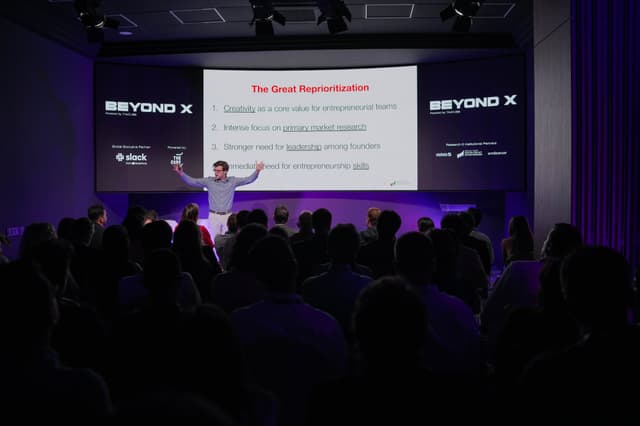
- You built a functional startup, with simulated customer validation, live on stage in exactly 30 minutes. Walk us through how you did that, and what it signals for the future of entrepreneurship.
For Corporate Leaders & Governance
- External surveys, including Pluralsight's 2025 AI Skills Report, found that 91% of C-Suite executives admit to exaggerating their AI knowledge. Your own AIDE Institute research went further, finding a median AI-literacy score of zero across S&P 500 leadership. What is the actual, financial cost of boardroom illiteracy?
- You state that "The Risk of Inertia" is far more dangerous than the risk of execution. Why do established boards have their view of AI risk completely backward?
- The book proposes a new C-Suite title: the Chief Node Officer (a play on "node," Cheek's term for any worker on the org chart, human or AI). What does this role do, and why do we need to stop defining organizations as just "groups of people"?
Strategy & Future-Proofing
- If the cost of building software has dropped to near zero, and anyone can build a product in an afternoon, what is the new competitive "moat" for a business today?
- You advise executives to use the "Sunday Afternoon Strategy" before bringing AI into the workplace. Why is the office the worst place to start learning AI?
- We are hearing more about "Zero-Person Companies" (ZPCs), and you actually built a platform for them called Entonomy. What happens to human purpose when a billion-dollar entity requires zero employees?
Key Terminology: The Novel Lexicon of No One Works Here
In No One Works Here, Paul Cheek argues that the most dangerous bug in the business world isn't in software code, it is in the dictionary. To navigate the AI era, leaders must adopt an entirely new, proprietary vocabulary to describe the shifting physics of business.
The Organization & The Workforce
- AI-Driven Enterprise (AIDE): A new category of business that bridges the gap between traditional models, building on Bill Aulet and Fiona Murray's established SME/IDE taxonomy. An AIDE combines the global ambition of an Innovation-Driven Enterprise (IDE) with the lean operational footprint of a Small and Medium Enterprise (SME).
- Organization (The Node Redefinition): The book fundamentally redefines an organization as "a group of nodes who work together in an organized way for a shared purpose".
- Carbon Nodes vs. Silicon Nodes: The new fundamental units of an organization. "Carbon Nodes" are human beings, while "Silicon Nodes" are autonomous AI agents.
- Chief Node Officer: The newly proposed title for the CHRO or Chief People Officer. Their mandate shifts from managing human headcount to evaluating whether every open role requires the empathy of a Human Node or the 24/7 availability of a Silicon Node.
- Zero-Person Company (ZPC): A post-human organizational model where a company ceases to be a gathering of people in a room and instead becomes a "Nexus of Processes" that lives in the cloud, optimizing itself and generating value with exactly zero employees.
The New Physics of Business
- Human Time vs. System Time: "Human Time" is the legacy metronome of the global economy, constrained by biological friction (sleeping, eating, and deliberating). "System Time" is the new operational standard where execution occurs instantaneously without biological bottlenecks.
- Silicon Payroll: The massive, structural costs of AI tokens, model training, data pipelines, API subscriptions, and compute inference that are rapidly replacing traditional human "Carbon Payroll" on the corporate ledger.
- The Reliability Tax (The Latency J-Curve): A phenomenon where deploying an AI agent initially causes latency to spike because humans spend more time auditing the agent’s output than doing the work themselves. Companies must push through this "messy middle" to achieve trust-based autonomy.

About Paul Cheek
Paul Cheek is a global expert on AI-driven enterprises and enterprise innovation. He is a Senior Lecturer at the MIT Sloan School of Management and Senior Advisor for Entrepreneurship & Artificial Intelligence at the Martin Trust Center for MIT Entrepreneurship. As founder of the AI-Driven Enterprise Institute and Entonomy, he develops data systems and software that power AI agent-run businesses. A Forbes 30 Under 30 honoree, bestselling author of Disciplined Entrepreneurship: Startup Tactics, and recipient of MIT’s Monosson Prize for impact on entrepreneurship education, Paul has advised and built ventures from seed to scale, with his work featured in The Wall Street Journal, Bloomberg, and Forbes.
Read Paul’s full bio →The weekly newsletter
Stay close to the work.
What Paul is seeing in AIDE strategy, board-level AI, and PE/VC moves. Short. Tactical.